The 10 Biggest SEO Changes of 2026
The short version: 2026 was the year Google stopped pretending to be just a search engine. AI Overviews went from experiment to default for most English-language queries, the helpful content systems matured into something close to a quality gate, third-party cookies were finally buried, and the spam updates wiped out entire private blog networks in a single weekend. Below are the ten changes that hit hardest — and the brands that paid the price.
TL;DR: The biggest SEO shocks of 2026 were AI Overviews becoming default, zero-click search crossing 65%, Google’s spam updates deindexing link networks, third-party cookie deprecation breaking retargeting, Reddit becoming a top-cited domain inside AI answers, and E-E-A-T becoming an algorithmic gating signal rather than a quality guideline. Local businesses, niche affiliates, and content farms were hit hardest. Brands that invested in original research, structured data, and answer-engine-ready content gained share while everyone else lost it.
1. AI Overviews Became the Default SERP Feature
For most of 2025, AI Overviews felt like an experiment you only saw on a fraction of queries. By mid-2026 they were the default for the majority of English-language informational searches, with the expanded rollout covering most African and Asian markets by Q3. Pages that ranked in the traditional top three results but were not extracted into the AI Overview saw click-through rates drop 20–40% year-over-year.
The brands that survived this shift were not the ones with the most backlinks. They were the ones with the most extractable content — clean H2/H3 hierarchies, definition lists, 40–60 word answer paragraphs, and FAQPage schema. The blue links did not disappear. They just got pushed below the answer.
Ranking #1 stopped being a traffic guarantee the day Google started answering the question itself.
2. Zero-Click Search Crossed 65%
By the end of 2026, an estimated 65–68% of Google searches ended without a click to any external website. That number was around 60% at the start of 2025. The implication is brutal: more than two-thirds of your potential organic search traffic now never reaches your site, because the search engine itself answers the query.
This did not kill SEO. It redistributed SEO. Brands that had been chasing top-of-funnel informational keywords (“what is SEO”, “how does email marketing work”) saw traffic collapse. Brands that targeted bottom-funnel, commercial-intent, and brand-specific queries held steady. The lesson: when the answer engine owns the answer, your job is to be the answer engine’s source — not its competitor.
3. The 2026 Spam Updates Wiped Out Entire Link Networks
Google’s 2026 spam updates were the most punishing I have seen in years of doing this work. Several well-known private blog networks were deindexed in a single weekend. Sites that had quietly bought links for years saw traffic drop 40–70% in 48 hours. The pattern was always the same: anchor text over-optimization, link velocity spikes, and domains with no genuine editorial reason to link.
Link building still works. It just no longer works the way it worked in 2020. The brands that gained link equity in 2026 earned it through original research, named methodologies, expert quotes picked up by journalists, and genuine partnerships. Everything else is a liability sitting on your link profile waiting to be flagged.
If you suspect your site has accumulated toxic backlinks from past campaigns, the cleanup is not optional. The 7-step website audit framework I use on every client walks through exactly how to find them, disavow them, and rebuild a clean link profile.
4. Third-Party Cookie Deposition Broke Broad Retargeting
After years of false funerals, third-party cookies were finally put to rest in 2026. The downstream effect on SEO was indirect but real: broad audience retargeting — the safety net many performance marketers relied on to recover traffic from visitors who did not convert on the first visit — became both smaller and less accurate.
Brands that had been treating retargeting as a substitute for owned-audience building suddenly found themselves without a fallback. The brands that thrived were the ones who had spent 2024 and 2025 quietly building email lists, SMS subscriber bases, and first-party data collection. The lesson that finally landed: every dollar invested in an owned audience in 2026 was worth three dollars of paid media in 2027.
5. Reddit Quietly Became a Top-Cited Domain Inside AI Answers
This was the shift that surprised everyone. Reddit threads — raw, unpolished, often poorly written — started appearing as cited sources inside AI Overviews and ChatGPT answers on a wide range of consumer and technical queries. Why? Because generative engines reward authenticity and consensus. Reddit threads aggregate dozens of human perspectives, signal real-world usage, and are nearly impossible to game with SEO.
The implication for brands is uncomfortable. You cannot control Reddit. You can only participate in it genuinely. Brands that tried to plant promotional content saw their threads downranked or removed. Brands that sent subject-matter experts to answer questions honestly in relevant subreddits saw their domains cited in AI answers months later.
6. E-E-A-T Became an Algorithmic Gating Signal
For years, E-E-A-T (Experience, Expertise, Authoritativeness, Trustworthiness) read like a Google quality guideline rather than a ranking factor. In 2026 it crossed over. Sites with named authors, verifiable credentials, clear author bios, and demonstrable first-hand experience of their subject matter started outranking anonymous content farms with stronger backlink profiles.
The fix was simple in principle and difficult in execution. Every page on your site should be attributable to a named human with verifiable expertise on the topic. Every author should have a real bio page with credentials, prior work, and contact information. Generic “admin” or “editorial team” authorship became a competitive disadvantage.
7. Local SEO Outperformed Broader Organic for Brick-and-Mortar
For brick-and-mortar and service-area businesses, local SEO quietly outperformed broader organic search in 2026. Google Business Profile completion — photos, services, products, weekly posts, and review velocity — became the single highest-leverage local marketing activity. The brands that posted weekly to their profile saw meaningful lifts in “near me” impressions, direction requests, and direct phone calls.
If you serve customers in a specific geographic area, this is the cheapest competitive moat you can build. I wrote a full breakdown of the essential steps to dominate nearby search earlier this year, and the playbook has only become more relevant as the year closed.
8. Helpful Content Systems Matured Into a Quality Gate
Google’s helpful content systems — first introduced in 2022 — finally matured in 2026 into something close to a binary quality gate. Sites with thin, generic, or AI-generated content at scale saw traffic collapse. Sites with original research, expert quotes, primary data, and demonstrable first-hand experience gained share.
The mistake I kept seeing brands make was treating “helpful content” as a synonym for “long content.” It is not. A 400-word post written by a named expert with original screenshots and primary data is more helpful than a 3,000-word post that restates what is already on page one. Length stopped mattering the moment AI made length free.
9. Structured Data Moved From Optional to Mandatory
For most of SEO history, structured data was a nice-to-have. You implemented FAQPage, Article, and BreadcrumbList schema because you had time, and it sometimes produced a rich result. In 2026 it became a baseline expectation. AI Overviews extract from structured data preferentially. ChatGPT and Perplexity read schema to understand entity relationships. Sites without schema started losing extractable answers to sites with schema.
If you have not audited your structured data this year, this is the lowest-cost, highest-leverage technical SEO fix you can make before 2027. The complete search optimization guide walks through the schema types that matter most right now.
10. Voice Search Finally Hit Commercial Intent
Voice search — the perpetual “next year” of SEO — finally crossed into commercial relevance in 2026, driven by Google Assistant’s deeper integration with AI Overviews and the expansion of voice-based shopping on smart speakers. Voice queries are still a small fraction of total search volume, but they skew heavily toward commercial intent (“find a plumber near me”, “order sushi delivery”) and convert at higher rates than text search for the queries where they apply.
The optimization pattern is the same as AEO: short answer paragraphs, question-format headings, FAQPage schema, and concise factual answers in the first 40–60 words. If you have already optimized for AI Overviews, you have already optimized for voice.
Who Got Hit Hardest
Three categories of websites absorbed most of the damage in 2026.
- Content farms and niche affiliates — Sites built on generic AI-generated content at scale, with no original research and no named authors. Traffic dropped 50–80% across the category.
- Sites with toxic link profiles — Brands that had quietly bought links for years and never cleaned up their backlink profile. The 2026 spam updates deindexed entire networks in single weekends.
- Brick-and-mortar businesses with no Google Business Profile strategy — Local businesses that treated their Google Business Profile as a one-time setup rather than an active marketing channel lost share to competitors who posted weekly and accumulated reviews.
If any of those describe you, the situation is recoverable — but the cleanup work is not optional. Earlier this year I published the results of auditing more than 100 Kenyan websites, and 73% failed basic SEO checks. The most common failures were the same ones the 2026 updates punished most.
What to Do Before 2027
If 2026 was the year the search stack split into three layers — traditional SEO, AEO, and GEO — then 2027 is the year every brand has to operate all three simultaneously. Tomorrow, Day 3 of this December Daily series breaks down the AEO layer in detail: how to write content that answer engines actually extract and cite.
In the meantime, three actions you can take this week.
Action 1: Pull up your top 10 organic pages from Search Console. Add a 40–60 word direct-answer paragraph to each one, right under the H1, marked up with FAQPage schema. This is the single highest-leverage AEO fix you can make.
Action 2: Audit your backlink profile for toxic links. If you have been buying links at any point in the last five years, this is not optional. Disavow anything that looks like a paid placement, a PBN, or an irrelevant site-wide footer link.
Action 3: If you serve customers in a specific location, post something to your Google Business Profile this week. A photo, a service update, an offer. Local SEO compounds slowly but relentlessly.
Frequently Asked Questions
What were the biggest SEO changes in 2026?
The ten biggest changes were: AI Overviews becoming the default SERP feature, zero-click search crossing 65%, the 2026 spam updates deindexing link networks, third-party cookie deprecation, Reddit becoming a top-cited domain in AI answers, E-E-A-T becoming an algorithmic signal, local SEO outperforming broader organic search, helpful content systems maturing into a quality gate, structured data becoming mandatory, and voice search hitting commercial intent.
Who was hit hardest by the 2026 SEO changes?
Content farms and niche affiliates relying on generic AI content saw traffic drop 50–80%. Sites with toxic backlink profiles from past link-buying were deindexed in single weekends. Brick-and-mortar businesses with no active Google Business Profile strategy lost local share to competitors who posted weekly.
Is SEO dead in 2027?
No, but it is no longer sufficient on its own. SEO in 2027 is the foundation layer beneath AEO (Answer Engine Optimization) and GEO (Generative Engine Optimization). Brands that maintain strong technical SEO, original content, and earned authority will be the same brands that surface in AI Overviews and generative chatbot citations.
How do I prepare my website for 2027 SEO?
Add 40–60 word direct-answer paragraphs to your top organic pages and mark them up with FAQPage schema. Clean up toxic backlinks from past link-buying. Post weekly to your Google Business Profile if you are a local business. Ensure every page has a named author with a real bio. Publish original research with citable numbers and named methodologies.
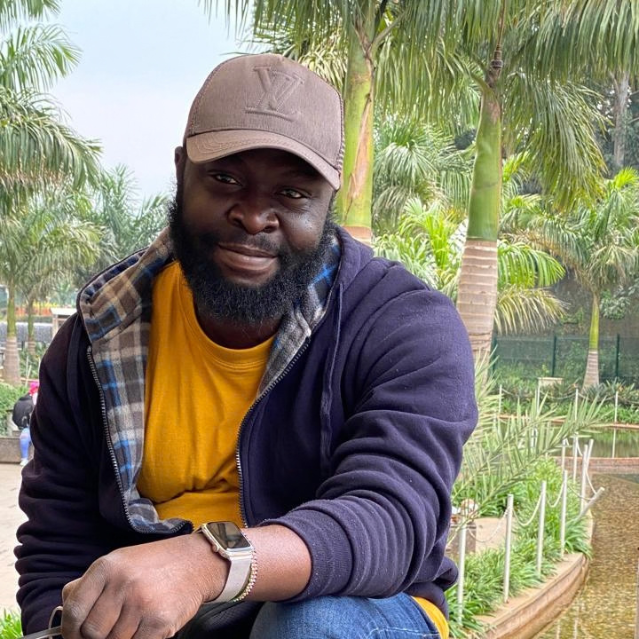
Temitope Aluko is a website developer and digital marketer, and the founder of tblaqhustle.com, where he writes about SEO, AEO, GEO, lead generation, and AI-augmented marketing for African and global SMEs. He is the author of Sustaining Success in a Changing World, Mastering Social Media Management with AI, and Empowering Your Mind to Achieve Success. Connect on LinkedIn or X / Twitter.
Want a 2027 SEO strategy built on real audit data, not generic best-practice theory? Chat with TblaqHustle on WhatsApp →